
Tech
Keine Karriere-Subdomain Gefunden: Ursachen, Folgen und Lösungen


Introduction
The message keine karriere-subdomain gefunden can feel confusing, frustrating, and even alarming when it suddenly appears on a website. At first glance, it looks technical and cryptic, yet it often points to a very real problem that affects companies, job seekers, developers, and content managers alike. In simple terms, this phrase usually signals that a dedicated career or jobs section—often hosted on its own subdomain—cannot be accessed or does not exist where it’s expected to be.
This article takes a deep, practical look at what keine karriere-subdomain gefunden really means, why it happens, and how it affects different users. You’ll learn how career subdomains work, what breaks when they’re missing, and how organizations can fix or prevent the issue. Whether you’re responsible for a website, applying for jobs, or managing digital infrastructure, this guide will give you clarity and confidence.
Understanding What “keine karriere-subdomain gefunden” Really Means
At its core, the phrase keine karriere-subdomain gefunden translates to “no career subdomain found.” It usually appears when a system, browser, or internal link tries to access a specific location—commonly something like karriere.companyname.com—and fails.
Will You Check This Article: Jeroen Dik: Meaning, Contexts, and Cultural Significance
A career subdomain is often used to separate job listings and employer branding from the main corporate website. When that subdomain doesn’t exist, isn’t configured correctly, or is temporarily unavailable, the system throws this message. The result is a dead end for users who expected to see open positions, application forms, or company culture content.
This issue is not limited to one industry or platform. It can appear on corporate websites, recruitment portals, internal HR systems, or even staging environments during development. Understanding the message helps you diagnose the problem faster and respond appropriately instead of guessing or ignoring it.
Why Companies Use Career Subdomains in the First Place
Many organizations choose to host their job listings on a dedicated subdomain instead of placing them directly on the main site. This approach offers flexibility, clarity, and technical separation.
A career subdomain allows teams to manage recruitment content independently. HR departments can update job postings, integrate application tools, and adjust layouts without touching the core website. This separation also helps with performance, security, and design consistency.
From a user’s perspective, a clear career area feels professional and trustworthy. Job seekers know exactly where to go, what to expect, and how to apply. When keine karriere-subdomain gefunden appears, it breaks that trust instantly and raises doubts about reliability or organization.
Common Technical Causes Behind the Error
The appearance of keine karriere-subdomain gefunden is rarely random. In most cases, it’s tied to a handful of common technical issues that can be identified and resolved with careful checks.
One frequent cause is misconfigured domain settings. If the subdomain was never created or was deleted accidentally, requests to that address will fail. Another common issue is server downtime. Even a properly configured subdomain can appear “missing” if the server hosting it is offline or unreachable.
Expired certificates, incorrect redirects, or recent migrations can also trigger this message. During website redesigns or platform changes, career pages are sometimes moved without updating all references. Over time, these outdated links lead users straight into error messages.
How This Issue Impacts Job Seekers
For job seekers, encountering keine karriere-subdomain gefunden can be discouraging. Someone may click a “Careers” link with genuine interest, only to be met with an error that stops them cold.
This interruption can lead to confusion and mistrust. Applicants may wonder if the company is still hiring, if the role is outdated, or if the organization is simply careless. In competitive job markets, even small obstacles can push talented candidates toward other employers.
Worse still, some users may assume the problem is on their end and give up entirely. A missing or broken career subdomain doesn’t just block access—it quietly filters out motivated people who might otherwise have applied.
Business and Brand Consequences for Organizations
From the company side, the impact of keine karriere-subdomain gefunden goes far beyond a technical hiccup. It directly affects employer branding and recruitment success.
A broken career link sends the wrong message. It suggests disorganization, neglect, or lack of attention to detail. For companies that invest heavily in culture, values, and talent acquisition, this kind of error undermines those efforts instantly.
There’s also a financial cost. Recruitment campaigns, referrals, and partnerships often point candidates to a specific career URL. If that destination fails, marketing spend and outreach efforts are effectively wasted until the issue is resolved.
Typical Scenarios Where the Error Appears
The message keine karriere-subdomain gefunden tends to show up during specific situations rather than at random times. Understanding these scenarios makes troubleshooting easier.
One common moment is during website relaunches. When a company updates its design or switches platforms, career pages may be moved or temporarily disabled. Another scenario involves third-party hiring tools. If the integration between the main site and the external system breaks, the subdomain may no longer respond.
It can also appear in internal environments, such as testing or preview versions of a site. In these cases, the message might not affect the public but still signals incomplete setup that needs attention before launch.
Key Differences Between a Missing and a Broken Subdomain
Not all errors are created equal. There’s an important distinction between a subdomain that doesn’t exist at all and one that exists but doesn’t function correctly.
| Situation | What’s Happening | Typical Outcome |
|---|---|---|
| Subdomain not created | No record or configuration exists | Immediate error message |
| Server offline | Subdomain exists but can’t be reached | Timeout or not found |
| Redirect misconfigured | Address points to wrong location | Confusing or blank page |
| Access restricted | Permissions block public access | Error or login prompt |
Recognizing which situation applies helps teams respond faster and avoid unnecessary guesswork.
How to Diagnose the Problem Step by Step
When faced with keine karriere-subdomain gefunden, a structured approach saves time. The first step is to verify whether the subdomain actually exists. This involves checking domain settings and confirming that the address is spelled correctly.
Next, confirm that the hosting environment is active and reachable. If the server is down or undergoing maintenance, restoring access may be all that’s needed. It’s also important to test redirects and internal links to ensure they point to the correct destination.
Finally, review recent changes. Updates, migrations, or security adjustments made shortly before the error appeared often hold the clue to its cause.
Preventing the Issue Before It Happens
Prevention is always easier than damage control. Avoiding keine karriere-subdomain gefunden starts with good planning and documentation.
Clear ownership of the career section is essential. Someone should be responsible for maintaining links, monitoring availability, and coordinating changes with technical teams. Regular audits of important URLs help catch problems early.
It also helps to treat the career subdomain as a critical business asset, not an afterthought. When it’s given proper attention, the risk of it disappearing unexpectedly drops dramatically.
When a Career Subdomain Isn’t the Best Choice
Interestingly, not every organization actually needs a separate career subdomain. In some cases, hosting job listings directly on the main site can reduce complexity and risk.
Smaller companies, startups, or organizations with limited hiring needs may find it easier to manage everything in one place. This approach minimizes configuration errors and ensures that career content benefits from the same maintenance routines as the rest of the site.
The key is consistency. Whether you use a subdomain or not, users should always know where to find opportunities—and that path should always work.
Real-World Example: A Missed Opportunity
Consider a mid-sized company running a hiring campaign. Ads, emails, and social posts all link to the same career address. One unnoticed configuration change leads to keine karriere-subdomain gefunden appearing for a full weekend.
During that time, hundreds of interested candidates click through, encounter the error, and move on. By Monday, the campaign data looks weak, and the talent pipeline feels thin. The issue wasn’t a lack of interest—it was a broken path.
This kind of scenario happens more often than many teams realize, which is why proactive checks matter so much.
Conclusion
The message keine karriere-subdomain gefunden may look like a small technical detail, but its impact is anything but small. It disrupts user journeys, damages trust, and quietly undermines recruitment efforts. Understanding what it means, why it happens, and how to fix it empowers both technical and non-technical teams to respond effectively.
By treating career access as a priority, reviewing configurations regularly, and choosing the right structure for your organization, you can avoid this issue entirely. In the end, a smooth, reliable path to job opportunities isn’t just a technical win—it’s a human one.
Frequently Asked Questions (FAQs)
What does “keine karriere-subdomain gefunden” usually indicate?
It typically means a career-related web address was expected but couldn’t be accessed. This may be due to missing setup, downtime, or incorrect configuration.
Is this error always caused by a technical problem?
Most of the time, yes. However, it can also appear when links are outdated or point to a location that was intentionally removed without updates elsewhere.
Can this issue affect job applications already in progress?
Indirectly, yes. If applicants can’t access listings or forms, they may abandon the process before submitting anything.
How quickly should this problem be fixed?
As soon as possible. Even short outages can lead to missed opportunities and negative impressions among potential candidates.
Is a career subdomain mandatory for all companies?
No. Some organizations choose to host career content within their main site, which can reduce complexity if managed well.

Introduction
The internet has changed the way people consume entertainment more dramatically than any technological shift in modern history. What once required a trip to a cinema or a carefully scheduled television broadcast is now available with a few clicks. In this rapidly evolving landscape, countless unofficial platforms have emerged, promising unlimited access to films and television series without subscription fees. Among these names, movirz has gained attention as a destination associated with free movie streaming.
The rise of platforms like movirz reflects a broader cultural shift. Audiences want immediacy. They want global content without geographic restrictions. They want convenience without recurring charges. Yet behind that promise lies a complex web of legal, ethical, technical, and security concerns. Understanding this phenomenon requires looking beyond surface-level curiosity and examining the deeper systems that make such platforms possible.
This article explores movirz in depth—what it represents, how it operates within the digital ecosystem, the risks involved, and why it continues to attract users despite growing awareness of its consequences.
What Is movirz
movirz is widely recognized as an online platform associated with free streaming or downloading of movies and television content without official licensing agreements. Unlike subscription-based services that negotiate distribution rights with studios and production companies, movirz operates in a gray or clearly unauthorized digital territory.
Will You Check This Article: rwu uar: A Transformative Academic Alliance Model Vision 26
The appeal of movirz lies in its accessibility. Users can typically search for newly released films, older classics, or popular television series and stream them instantly. In many cases, content appears shortly after theatrical release or even before official home distribution windows close. For audiences in regions where certain titles are unavailable or delayed, this kind of access feels empowering.
However, the key distinction is that movirz does not function as a licensed distributor. It does not pay royalties to filmmakers, actors, production houses, or rights holders. Instead, it often relies on uploaded files, embedded streams, or mirrored hosting services that circulate copyrighted material without permission. This fundamental difference places it outside the structure of legitimate entertainment platforms.
Understanding movirz requires acknowledging that it is not merely a website; it is part of a wider network of digital file-sharing practices that have existed since the early days of peer-to-peer technology.
The Origins and Evolution of Unofficial Streaming Platforms
To understand how movirz fits into the digital landscape, it helps to trace the evolution of online piracy. In the early 2000s, peer-to-peer sharing platforms transformed the way people exchanged music and films. Downloading content through torrent networks became common practice. Although these systems required technical knowledge and patience, they laid the groundwork for what would later become instant streaming piracy.
As internet speeds improved and video compression technology advanced, streaming replaced downloading. Users no longer had to wait hours for a file to complete. They could click and watch. Platforms emerged that aggregated links, embedded players, and hosted large libraries of copyrighted films. movirz belongs to this second-generation ecosystem.
Another important shift occurred when legitimate streaming services fragmented content across multiple subscriptions. Instead of one central platform, viewers needed separate memberships for different studios. For some users, this fragmentation fueled the demand for unofficial alternatives. movirz and similar platforms capitalized on this frustration by presenting themselves as centralized hubs where “everything” seemed available in one place.
This evolution was not accidental. It was shaped by consumer behavior, pricing models, global licensing restrictions, and the technological democratization of content hosting.
How movirz Typically Operates
Although specific technical details may vary, platforms like movirz usually function through layered hosting structures. The website itself may not store large video files directly. Instead, it often links to third-party file hosts or embedded streaming servers located in jurisdictions with weak enforcement of copyright laws.
Revenue generation is another crucial piece of the puzzle. Since movirz does not charge subscription fees in the traditional sense, it typically relies on advertising networks. These ads can range from harmless banners to aggressive pop-ups and redirect pages. In some cases, more intrusive advertising practices are used to compensate for the absence of paid memberships.
Domain shifting is also common. When authorities shut down one domain, a nearly identical mirror site may appear under a new address. This resilience makes enforcement complicated and allows platforms like movirz to reappear even after legal action.
The system thrives on decentralization. Content is uploaded, mirrored, and redistributed across multiple hosts. Even if one link is removed, others often remain. This structure makes complete eradication extremely difficult.
Legal and Ethical Dimensions
The legality of accessing content through movirz depends on jurisdiction, but in many countries, streaming or downloading copyrighted material without authorization violates intellectual property laws. Production studios invest millions, sometimes hundreds of millions, into creating films. When content is distributed without payment, revenue losses ripple across the entire creative chain.
Beyond legality lies the ethical dimension. Filmmaking is collaborative. Writers, editors, camera operators, costume designers, visual effects teams, and countless other professionals contribute to each production. When platforms like movirz circulate films without compensation, these professionals indirectly bear the impact.
Some users justify their actions by arguing that large studios can afford the losses. However, independent filmmakers and smaller production houses often struggle to recover budgets. Unauthorized distribution can significantly affect their ability to finance future projects.
The ethical debate becomes even more complex when considering accessibility. In some regions, legitimate streaming options are limited or unaffordable. For viewers in these markets, unofficial platforms appear to fill a gap. This tension between affordability, availability, and legality remains one of the most contested aspects of the movirz phenomenon.
Security Risks and User Vulnerability
While legal consequences are often discussed, the security risks associated with movirz deserve equal attention. Unofficial streaming sites frequently operate through aggressive advertising ecosystems. Pop-up windows, misleading download buttons, and redirect links can expose users to malware, spyware, and phishing attempts.
Unlike licensed platforms that maintain strict cybersecurity standards, movirz does not offer guarantees of data protection. Users may unknowingly download malicious files disguised as media players or video codecs. In some cases, personal information can be harvested through deceptive forms.
Another overlooked risk involves data tracking. Certain unauthorized sites embed scripts that collect browsing behavior for resale to third-party advertisers. This tracking happens without the transparency expected from legitimate digital services.
For many users, the immediate convenience overshadows these long-term risks. Yet the cost of a compromised device or stolen data can far exceed the price of a monthly subscription.
The Cultural Impact of Platforms Like movirz
Despite legal and security concerns, movirz represents a broader cultural shift toward on-demand access. Audiences have grown accustomed to immediacy. Waiting months for a regional release feels outdated in a world where global conversations about films unfold instantly on social media.
This expectation pressures official distributors to rethink release strategies. Simultaneous global premieres, shorter theatrical windows, and digital-first releases have become more common partly because audiences demand speed.
In an indirect way, platforms like movirz influence industry decisions. They expose weaknesses in distribution systems. They highlight geographic inequalities.They reveal pricing frustrations. While their methods are controversial, the demand they attract signals real gaps in the entertainment marketplace.
The conversation, therefore, should not be limited to condemnation. It should also examine why such platforms continue to thrive despite repeated shutdowns.
The Economics Behind Free Streaming
There is a misconception that “free” content exists without economic consequences. In reality, movirz operates within an underground digital economy. Advertising networks pay site operators based on impressions and clicks. Traffic volume becomes currency.
Some studies of similar platforms have shown that high-traffic piracy sites can generate substantial revenue from ads alone. The more popular the film catalog, the more users visit, and the higher the advertising returns.
At the same time, legitimate streaming platforms face rising production costs. Exclusive content, original series, and high-budget films require sustained revenue streams. Subscription fees fund these projects. When a portion of the audience migrates to unofficial platforms, the financial ecosystem becomes strained.
The economics of movirz illustrate a paradox. Users seek to avoid paying, yet the entertainment they enjoy depends on financial support. This tension shapes ongoing debates about accessibility, fairness, and sustainability.
Government Responses and Enforcement Efforts
Governments worldwide have attempted to address online piracy through legislation, domain blocking, and international cooperation. However, enforcement remains complicated. The decentralized nature of platforms like movirz allows them to reappear under new domain names or hosting providers.
Internet service provider blocking has been implemented in several regions, limiting access to known piracy domains. Yet tech-savvy users often bypass these restrictions through virtual private networks or alternative DNS services.
The enforcement cycle resembles a digital game of whack-a-mole. One domain disappears; another emerges. This persistence demonstrates both the resilience of decentralized hosting systems and the difficulty of applying traditional legal frameworks to borderless digital networks.
Why Users Continue to Choose movirz
It would be simplistic to assume that users of movirz are unaware of the risks. Many understand the legal and security implications. Yet they continue to visit such platforms for specific reasons.
Cost remains a central factor. As subscription services multiply, the cumulative expense increases. Some viewers feel overwhelmed by the need to subscribe to multiple platforms to access a complete range of content.
Availability also plays a role. Regional licensing restrictions often delay or block certain films. Unofficial platforms remove these barriers.
Convenience cannot be underestimated. The ability to search a single database and find both new releases and older titles in one place appeals to users who dislike platform fragmentation.
Understanding these motivations does not justify unauthorized distribution, but it explains the persistence of demand.
Conclusion
movirz represents more than a single website. It symbolizes the tension between digital accessibility and intellectual property rights in the modern era. On one side stands the public’s expectation of instant, affordable, borderless entertainment. On the other stands an industry built on contracts, royalties, and structured distribution models.
The existence of movirz highlights gaps in pricing, global licensing, and content availability. At the same time, it raises serious concerns about legality, cybersecurity, and ethical responsibility. The conversation should not be framed in extremes. Instead, it should encourage balanced reflection on how entertainment can remain both accessible and sustainable.
As technology continues to evolve, the debate surrounding platforms like movirz will likely intensify. The challenge lies in finding solutions that protect creative labor while acknowledging the realities of modern consumer expectations.
FAQs
What is movirz mainly used for?
movirz is generally associated with streaming or downloading movies and television content without official licensing agreements.
Is using movirz legal?
In many countries, accessing copyrighted content through unauthorized platforms violates intellectual property laws, though specific regulations vary by jurisdiction.
Can movirz harm my device?
Unofficial streaming sites may expose users to malware, intrusive ads, or phishing attempts, increasing the risk of compromised devices or stolen data.
Why do people use movirz despite the risks?
Common reasons include avoiding multiple subscription fees, accessing region-restricted content, and seeking convenience through centralized content libraries.
Are there safer alternatives to movirz?
Licensed streaming platforms provide legal access to films and series while ensuring content creators are compensated and user data remains protected.

Introduction
In a digital world overflowing with platforms, frameworks, and systems promising innovation, few concepts generate quiet curiosity the way lakede does. The term has surfaced in technical discussions, development communities, and emerging digital infrastructure conversations, yet it often remains misunderstood or oversimplified. At its core, lakede represents more than just a tool or system. It signals a structural shift in how information, processes, and digital ecosystems are organized and sustained.
The rise of lakede reflects a broader movement toward decentralized intelligence, adaptive architecture, and smarter integration between data and application layers. Rather than operating as a rigid platform with fixed constraints, it functions as an evolving environment that supports flexibility and scale. Understanding it requires stepping beyond surface-level definitions and exploring the philosophy, architecture, and real-world implications behind it.
This article takes a deep dive into lakede, unpacking its meaning, structure, applications, advantages, and future potential. Whether you are a digital strategist, technology enthusiast, or business leader navigating modern infrastructure decisions, gaining clarity on lakede can offer valuable insight into where digital systems are heading.
What Is lakede
lakede is a digital ecosystem architecture designed to unify distributed data, intelligent processing, and adaptive application environments within a scalable and modular framework. Unlike traditional systems that separate storage, analytics, and deployment into isolated components, lakede integrates them into a cohesive and responsive environment.
Will You Check This Article: veganovies com: The Definitive Guide to Its Mission, Content, and Value
At a foundational level, lakede operates as a hybrid structure combining elements of data lakes, decentralized computing, and real-time orchestration layers. However, describing it purely in technical terms would miss its essence. The true distinction of lakede lies in its ability to dynamically organize and reinterpret information based on contextual demand rather than static programming rules.
This means that lakede is not just about storing large volumes of data. It is about creating an environment where data can evolve into actionable intelligence through structured relationships and adaptive workflows. The system prioritizes interoperability, meaning different digital components can communicate without friction. As organizations increasingly depend on cross-platform collaboration and distributed cloud environments, lakede offers a structural solution that supports complexity without becoming chaotic.
In simple terms, lakede is an intelligent infrastructure layer that transforms fragmented digital assets into a harmonized, scalable ecosystem.
The Architectural Foundation Behind lakede
To truly understand the value of lakede, it is essential to explore how it is structured. Traditional digital architecture often follows a linear design. Data is collected, stored in one system, processed in another, and delivered through yet another interface. Each layer is dependent on fixed integration rules. This rigidity slows innovation and increases maintenance costs.
lakede disrupts this pattern through modular architecture. Instead of linear pipelines, it uses interconnected nodes that function both independently and collaboratively. These nodes are not bound by permanent hierarchies. They communicate through adaptable protocols, enabling faster response to changing workloads.
Another defining characteristic of lakede architecture is its emphasis on distributed intelligence. Rather than relying on a central processing hub, decision-making logic is spread across the system. This reduces bottlenecks and enhances resilience. If one component encounters failure, the rest of the environment remains operational.
Security is also woven directly into the architectural layer. Instead of adding protection mechanisms as external patches, lakede integrates authentication, encryption, and validation processes within each node. This design significantly reduces vulnerabilities that often emerge in loosely connected systems.
The architectural model of lakede ultimately prioritizes adaptability. It is designed to grow without requiring structural overhauls, making it particularly relevant in industries where scalability and agility determine long-term success.
Why lakede Matters in Modern Digital Transformation
The modern digital landscape is defined by rapid expansion of data. Organizations generate information at unprecedented speed, and the challenge is no longer collection but intelligent utilization. Systems built a decade ago struggle to manage this scale efficiently.
lakede addresses this gap by redefining how digital transformation is approached. Rather than focusing solely on performance optimization, it focuses on structural intelligence. This shift has profound implications.
Businesses that adopt lakede can move from reactive operations to predictive operations. Because the system continuously reorganizes and contextualizes data, patterns emerge earlier. Decision-makers gain insight not after problems arise, but before they fully materialize.
Additionally, the framework encourages cross-department integration. In traditional settings, marketing systems, operational systems, and analytics tools often function independently. lakede dissolves these silos by enabling unified access to shared intelligence layers.
This holistic integration supports innovation. Teams can build new applications or automate processes without rebuilding foundational infrastructure. The environment supports experimentation, which is essential for sustainable growth.
In a broader sense, lakede matters because it shifts digital infrastructure from a passive storage model to an active intelligence model.
Real-World Applications and Industry Adoption
Although still evolving, lakede is increasingly adopted across sectors that rely heavily on dynamic data processing. Financial institutions use it to streamline risk assessment by integrating transaction data, behavioral analytics, and compliance tracking within a unified structure.
Healthcare systems have explored similar frameworks inspired by lakede to manage patient records, research datasets, and predictive diagnostic tools without fragmenting information sources. The adaptive architecture allows real-time data sharing while maintaining strict privacy controls.
E-commerce platforms benefit from lakede by merging inventory management, customer behavior tracking, and supply chain logistics into one intelligent layer. This integration allows pricing models and promotional strategies to adjust instantly according to demand fluctuations.
Technology companies, particularly those building artificial intelligence products, find lakede especially valuable. Training models require vast datasets, but those datasets must be cleaned, categorized, and processed efficiently. The system’s distributed intelligence model accelerates these workflows without sacrificing control.
Government agencies and smart city initiatives also explore similar infrastructures, using lakede principles to coordinate traffic systems, environmental sensors, and public service platforms within a single digital ecosystem.
The adaptability of lakede makes it applicable wherever complex data relationships exist. Its relevance grows as industries demand faster, smarter infrastructure capable of supporting innovation without constant reconstruction.
Technical Advantages Over Conventional Systems
Comparing lakede to conventional digital systems reveals several structural advantages. First is scalability without disruption. Traditional systems often require downtime or expensive migrations when scaling. In contrast, lakede allows incremental expansion by adding new nodes without redesigning the entire environment.
Second is resilience. Distributed processing reduces the risk of catastrophic failure. Because responsibilities are shared, localized issues do not cascade across the network.
Third is efficiency in data retrieval and analysis. Instead of extracting information from separate repositories, the integrated design allows real-time queries across interconnected layers. This shortens analysis cycles and supports faster decision-making.
Another often overlooked advantage is governance. Data compliance regulations continue to evolve, and organizations must maintain strict oversight. The embedded security layers within lakede simplify auditing and access control, reducing administrative burden.
Finally, the framework encourages innovation by lowering integration barriers. Developers can introduce new modules without rewriting foundational logic. This reduces time-to-market and encourages experimentation, an essential ingredient for competitiveness.
Challenges and Misconceptions
Despite its strengths, lakede is not without challenges. One common misconception is that it is merely a rebranded data lake. While it shares conceptual similarities, it extends far beyond storage by embedding intelligence and orchestration capabilities directly into the infrastructure.
Another challenge lies in implementation complexity. Migrating from traditional systems to lakede requires strategic planning. Organizations must assess compatibility, workforce expertise, and transitional costs. Without careful execution, the shift can become overwhelming.
There is also a learning curve. Teams accustomed to linear system design may initially struggle with decentralized logic structures. However, once mastered, the flexibility often outweighs the initial discomfort.
Cost perception presents another barrier. While long-term efficiency gains can offset expenses, upfront investment in infrastructure redesign can appear significant. Decision-makers must weigh short-term costs against long-term strategic benefits.
Understanding these realities ensures that adoption of lakede is thoughtful rather than impulsive.
The Future Potential of lakede
The trajectory of digital infrastructure suggests that ecosystems like lakede will become increasingly central. As artificial intelligence systems grow more complex and global connectivity intensifies, static architectures will prove insufficient.
Future iterations of lakede may incorporate enhanced autonomous decision layers, allowing systems to optimize themselves with minimal human intervention. Integration with edge computing environments could further expand its responsiveness, enabling real-time adaptation even in geographically dispersed networks.
Sustainability considerations also align with its modular approach. Distributed processing can reduce energy consumption by optimizing workload allocation, an increasingly important factor in environmentally conscious technology development.
Moreover, as cross-border collaboration increases, the interoperability principles embedded within lakede will likely support international digital frameworks. Its flexible design allows adaptation to diverse regulatory and operational environments.
In essence, lakede represents a transitional bridge between rigid infrastructure models and fluid digital ecosystems designed for continuous evolution.
Conclusion
lakede stands at the intersection of data intelligence, adaptive architecture, and scalable infrastructure. It challenges the traditional separation of storage, processing, and application layers by unifying them into a responsive ecosystem. This integration empowers organizations to move beyond reactive digital management toward predictive, intelligent operations.
While implementation requires strategic foresight and technical maturity, the long-term advantages in resilience, scalability, and innovation potential are compelling. As industries increasingly rely on dynamic data environments, frameworks like lakede are not simply optional upgrades but foundational evolutions.
Understanding lakede is not about mastering a single tool. It is about recognizing a structural shift in how digital systems are conceived and sustained. Those who grasp its principles today position themselves at the forefront of tomorrow’s technological landscape.
FAQs
What makes lakede different from traditional data systems?
lakede differs by integrating storage, processing, and orchestration into a unified and adaptive ecosystem rather than separating them into isolated components.
Is lakede suitable for small businesses?
Yes, although adoption depends on infrastructure needs. Smaller organizations can benefit from its scalability, but implementation planning is essential to ensure cost-effectiveness.
Does lakede replace cloud computing?
No, lakede complements cloud computing. It can operate within cloud environments while enhancing how distributed data and intelligence are structured.
Is lakede only for technology companies?
Not at all. Industries such as finance, healthcare, retail, and government can leverage its adaptive infrastructure to manage complex data relationships.
What is the biggest challenge when adopting lakede?
The most significant challenge is transitioning from traditional linear architecture to a decentralized and modular framework, which requires strategic planning and skilled implementation.
Introduction
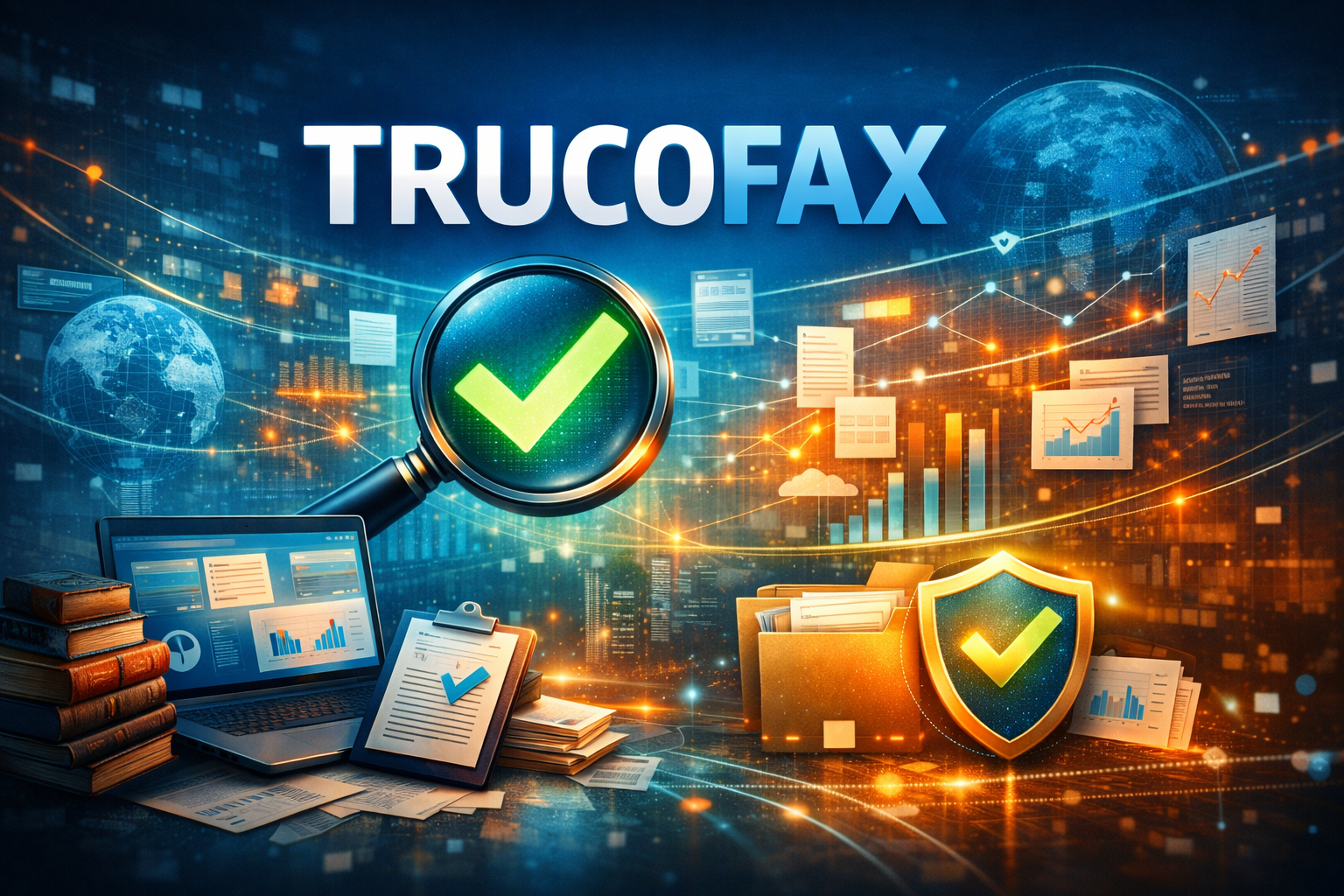
In a digital-first world where information moves fast, tools and concepts that promise clarity and trust naturally attract attention. Trucofax is one such term that’s been quietly gaining interest across different industries and user groups. Whether you’ve heard it mentioned in professional conversations, seen it referenced online, or stumbled upon it while researching reliable data tools, raises an important question: what exactly is it, and why does it matter?
This article explores trucofax in depth, breaking down its meaning, practical uses, and broader implications. You’ll learn how trucofax works, where it fits across multiple categories, and why people are increasingly paying attention to it. By the end, you’ll have a clear, confident understanding of and how it may apply to your own needs or decisions.
What Is Trucofax?
At its core, trucofax refers to a structured system or concept designed to verify, cross-check, and present factual information in a trustworthy way. Rather than being limited to one industry, is best understood as a framework that emphasizes accuracy, transparency, and traceability of data.
Will You Check This Article: Messeregge: Meaning, Uses, and Modern Potential
Think of trucofax as a “truth filter.” Just as a water filter removes impurities before water reaches your glass, aims to remove inconsistencies, exaggerations, or misleading elements before information reaches the user. This makes it valuable in environments where decisions rely heavily on dependable facts.
Unlike simple databases or static reports, is often associated with dynamic data handling. It doesn’t just store information; it evaluates it, compares sources, and highlights reliability indicators. That flexibility is one reason it resonates across sectors.
Quick Overview of Trucofax
Before diving deeper, here’s a concise snapshot to frame the discussion:
| Aspect | Details |
|---|---|
| Concept type | Information verification framework |
| Primary goal | Improve trust and accuracy |
| Common uses | Research, reporting, decision support |
| Industry reach | Business, education, technology, media |
| Core value | Transparency and confidence in data |
This overview shows why trucofax isn’t confined to a single niche. Its principles are broadly applicable, making it adaptable and relevant in many contexts.
The Origins and Evolution of Trucofax
The idea behind trucofax didn’t appear overnight. It evolved as a response to a growing challenge: information overload. As access to data expanded, so did the risk of misinformation, outdated facts, and biased interpretations.
Early versions of trucofax-like systems focused on manual verification. Experts would cross-check claims using trusted references, a time-consuming but reliable process. Over time, automation and structured methodologies improved efficiency while preserving accuracy.
Today, trucofax represents a more mature approach. It blends human judgment with systematic checks, ensuring information remains both credible and usable. This evolution reflects a broader shift toward accountability in how information is shared and consumed.
How Trucofax Works in Practice
Understanding trucofax becomes easier when you see how it functions in real situations. The process usually follows a clear flow, even if the underlying tools differ.
First, data is collected from multiple sources rather than a single origin. This reduces the risk of one-sided perspectives. Next, the information is evaluated for consistency, relevance, and timeliness. Conflicting data points are flagged instead of ignored.
Finally, the output is presented in a structured way that highlights confidence levels and potential limitations. Users don’t just receive answers; they receive context. This approach empowers people to make informed decisions rather than blindly accepting information.
Key Features That Define Trucofax
Several defining features set trucofax apart from basic information systems. These elements work together to create trust.
One standout feature is traceability. Users can see where information originated and how it was verified. Another is adaptability. Trucofax frameworks can be adjusted to suit different industries without losing their core principles.
There’s also an emphasis on clarity. Instead of overwhelming users with raw data, trucofax focuses on presenting insights in an understandable format. This balance between depth and accessibility is a major reason for its growing appeal.
Trucofax Across Different Industries
Business and Finance
In business settings, trucofax supports due diligence and strategic planning. Executives rely on verified data to assess risks, evaluate opportunities, and justify decisions. By reducing uncertainty, helps organizations act with confidence.
Education and Research
For educators and researchers, trucofax reinforces academic integrity. It encourages the use of verified sources and transparent methodologies. Students benefit by learning how to evaluate information critically rather than memorizing unchecked facts.
Media and Communication
Media professionals face constant pressure to report quickly without sacrificing accuracy. Trucofax offers a framework that supports responsible reporting. It helps journalists confirm claims before publication, protecting credibility and audience trust.
Why Trucofax Matters in the Modern World
The relevance of trucofax becomes clear when you consider the consequences of unreliable information. Poor data can lead to bad decisions, damaged reputations, and financial loss. In some cases, it can even affect public safety.
Trucofax matters because it promotes accountability. It shifts the focus from speed alone to accuracy with speed. In a culture that often rewards being first, trucofax reminds us that being right is just as important.
On a personal level, trucofax empowers individuals. It gives people tools to question, verify, and understand information instead of passively consuming it.
Common Misconceptions About Trucofax
One common misunderstanding is that trucofax guarantees absolute truth. In reality, it aims for informed reliability, not perfection. Information can evolve, and trucofax accounts for that by highlighting uncertainty rather than hiding it.
Another misconception is that trucofax is overly complex. While the underlying systems can be sophisticated, the user experience is often designed to be simple and intuitive. Complexity stays behind the scenes.
Some also believe trucofax is only for experts. In practice, its principles benefit anyone who values clear, dependable information.
Real-World Example: Trucofax in Action
Imagine a mid-sized company considering a partnership with a new supplier. Initial reports look promising, but details vary between sources. Using a trucofax approach, the company gathers data from financial records, industry reviews, and third-party assessments.
Inconsistencies are flagged, prompting further investigation. The final decision isn’t based on a single glowing report but on a balanced, verified picture. This process reduces risk and builds long-term confidence in the outcome.
Such examples show how trucofax translates from theory into practical value.
Benefits and Limitations of Trucofax
Like any framework, trucofax has strengths and boundaries. Its benefits include improved trust, better decision-making, and reduced misinformation. These advantages are especially valuable in high-stakes environments.
However, trucofax also requires effort. Collecting and verifying data takes time and resources. When misapplied, it can slow processes unnecessarily. The key lies in using trucofax thoughtfully, aligning its depth with the importance of the decision at hand.
Conclusion
Trucofax represents more than a tool or buzzword; it embodies a mindset centered on accuracy, transparency, and responsibility. Throughout this article, we explored what means, how it works, and why it holds value across industries. From business decisions to education and media, its principles help transform raw data into trustworthy insight.
The growing interest in trucofax reflects a broader desire for clarity in a noisy information landscape. By adopting its core ideas, individuals and organizations can navigate complexity with greater confidence. In a world where information shapes outcomes, offers a steady compass pointing toward informed, thoughtful action.
Frequently Asked Questions (FAQs)
What does trucofax actually mean?
Trucofax refers to a framework focused on verifying and presenting reliable information. It emphasizes accuracy, transparency, and contextual understanding rather than raw data alone.
Is trucofax limited to a specific industry?
No, trucofax is adaptable. Its principles apply across business, education, media, and other fields where dependable information matters.
Does trucofax guarantee complete accuracy?
Trucofax improves reliability but doesn’t claim perfection. It highlights confidence levels and uncertainties so users can judge information wisely.
Who benefits most from using trucofax?
Anyone making decisions based on information can benefit. This includes professionals, students, researchers, and everyday users seeking clarity.
How is trucofax different from basic fact-checking?
Unlike simple fact-checking, provides context, source traceability, and structured evaluation, offering deeper insight into information quality.

movirz and the Shadow World of Free Movie Streaming SitesHub

rwu uar: A Transformative Academic Alliance Model Vision 26

valplekar: Roots, Meaning, and Cultural Legacy

Messeregge: Meaning, Uses, and Modern Potential

Trucofax Explained: A Complete Guide to Its Meaning, Uses, and Impact

Camehoresbay: Exploring a Mysterious Digital-Sounding Term
-
 Tech1 week ago
Trucofax Explained: A Complete Guide to Its Meaning, Uses, and Impact
-
 Tech1 week ago
Camehoresbay: Exploring a Mysterious Digital-Sounding Term
-

 Blogs1 week ago
Mansutfer: A Modern Concept Shaping How People Create and Deliver Value
-

 Entertainment1 week ago
ReadMyManga Com: A Deep Dive Into the Platform Manga Fans Seek
-

 Sports1 week ago
AC Milan vs SSC Bari Timeline: A Historic Italian Football Rivalry
-

 Crypto1 week ago
5starsstocks.com: A Practical Guide to Smarter Investing
-

 Business1 week ago
MyGreenBucks Kenneth Jones: Insights, Impact, and Influence
-

 Blogs1 week ago
Mila Volovich: A Modern Creative Force Shaping Culture