Travel
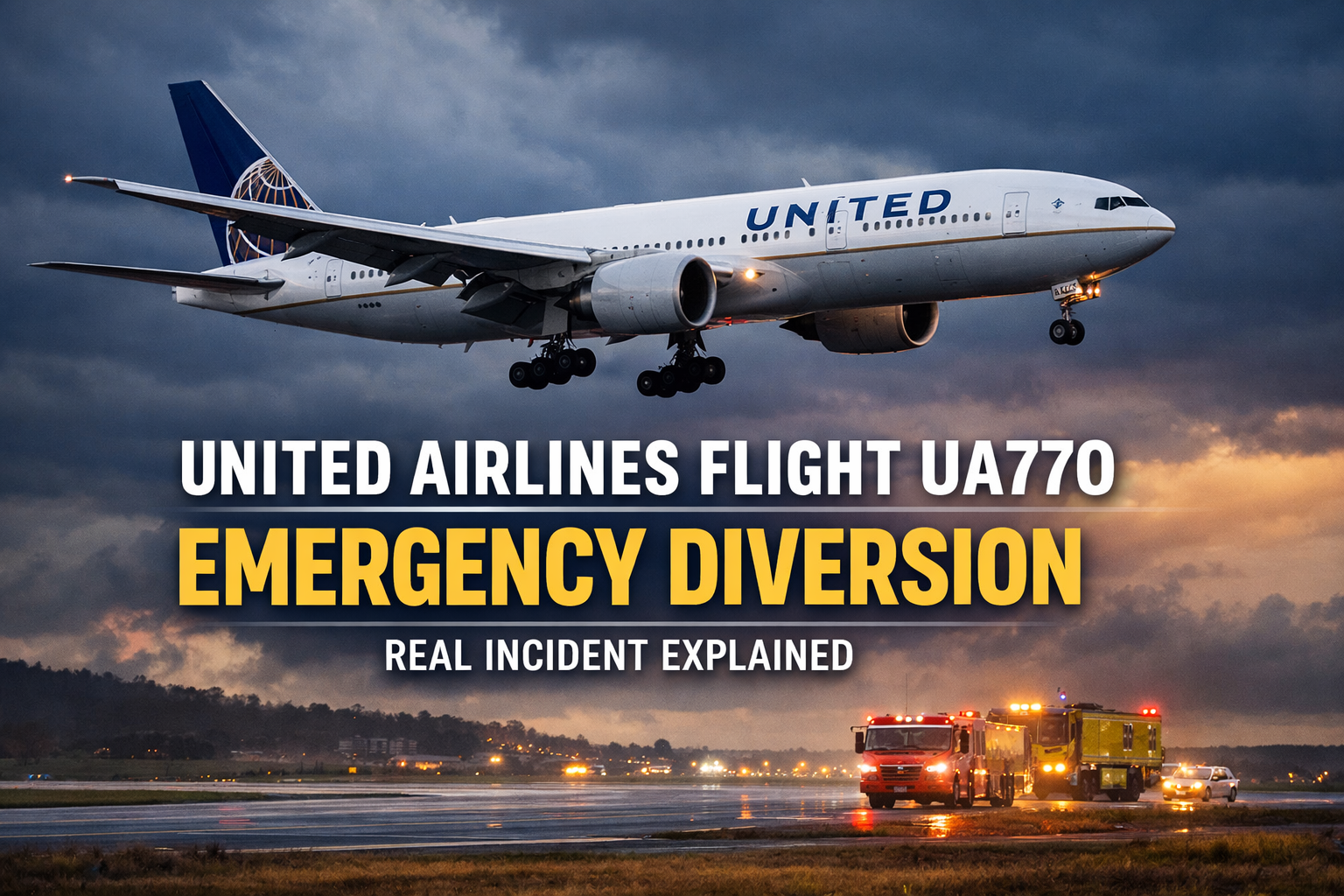
United Airlines Flight UA770 Emergency Diversion Explained

Introduction
Air travel is built on routines, checklists, and predictability—until it isn’t. The United Airlines Flight UA770 emergency diversion captured attention because it reminded passengers and aviation watchers alike that even in a highly regulated industry, unexpected situations can unfold midair. When a long-haul commercial flight diverts unexpectedly, questions follow quickly: What happened? How are passengers protected? And what does an incident like this reveal about airline safety and decision-making?
This in-depth guide explores the United Airlines Flight UA770 emergency diversion from every relevant angle. You’ll learn how emergency diversions work, what typically triggers them, how airlines coordinate responses, and what passengers can expect during and after such events. We’ll also look at the broader context—aircraft systems, crew training, and industry protocols—so the incident makes sense beyond the headlines.
Understanding United Airlines and Flight Operations
United Airlines is one of the largest carriers in the world, operating thousands of flights daily across domestic and international routes. With a vast fleet and global network, United’s operations rely on layered safety systems designed to detect problems early and manage risk conservatively.
Will You Check This Article: Gayfirir: Meaning, Culture, Identity, and Modern Use
Commercial aviation works on a simple principle: safety overrides schedule. That’s why diversions exist as a standard operational tool rather than a sign of failure. When something doesn’t meet strict thresholds—mechanical readings, medical needs, or environmental conditions—flight crews are empowered to divert.
Typical Aircraft Used on Long-Haul Routes
While airlines rotate equipment, flights like UA770 are commonly operated by wide-body aircraft such as the Boeing 777. These planes are designed for long distances, redundancy, and reliability, with multiple backup systems for critical functions.
What Is an Emergency Diversion?
An emergency diversion occurs when a flight lands at an airport other than its original destination due to safety, health, or operational concerns. Contrary to popular belief, “emergency” doesn’t always mean imminent danger. It means the crew determined that landing as soon as practical was the safest option.
Diversions are governed by strict procedures. Pilots don’t improvise; they follow checklists, consult dispatchers, and coordinate with air traffic control. Every decision is logged, reviewed, and often audited later.
Common Triggers for Emergency Diversions
Although details can vary, diversions usually fall into a few well-understood categories:
- Mechanical or system alerts that require inspection on the ground
- Passenger or crew medical emergencies
These situations don’t imply negligence. In fact, they highlight the system working exactly as intended.
United Airlines Flight UA770 Emergency Diversion: What We Know
The United Airlines Flight UA770 emergency diversion unfolded during routine operations when the flight crew identified a condition that warranted an unscheduled landing. As per standard protocol, the pilots communicated with United’s operations center and air traffic controllers to select a suitable diversion airport.
While airlines don’t always release granular technical details immediately, the response pattern itself is revealing. A diversion signals that the crew chose caution over continuation—a decision reinforced throughout modern pilot training.
Timeline of a Typical Diversion Scenario
From cockpit to cabin, events usually progress in a structured way. The crew diagnoses the issue, informs controllers, briefs cabin staff, and then communicates with passengers once the situation is stabilized. Emergency services may be placed on standby, even if they’re ultimately not required.
How Pilots Decide to Divert a Flight
The decision to divert isn’t made lightly. Pilots evaluate multiple variables simultaneously, including aircraft performance data, weather, airport facilities, runway length, and medical infrastructure if a passenger is ill.
Modern aircraft provide real-time diagnostics, but human judgment remains central. Pilots are trained to assume that uncertainty equals risk. If a warning can’t be fully resolved in the air, landing early becomes the responsible choice.
Crew Resource Management in Action
Emergency diversions showcase Crew Resource Management (CRM), a system that emphasizes teamwork, communication, and shared decision-making. Captains, first officers, flight attendants, and ground teams all play coordinated roles to reduce stress and error.
Passenger Experience During the UA770 Diversion
For passengers, an emergency diversion can feel confusing or even frightening. Cabin announcements are often brief at first, focusing on reassurance rather than technical detail. This is intentional; clarity matters more than complexity during uncertain moments.
Once on the ground, airlines shift quickly from safety mode to care mode. That includes arranging accommodations, rebooking flights, and providing meals or vouchers depending on the circumstances and delay length.
Emotional Impact on Travelers
Even when outcomes are safe, diversions disrupt plans and elevate anxiety. Seasoned travelers often note that transparency and empathy from the crew make the biggest difference. A calm explanation and visible professionalism can ease tension significantly.
Safety Systems Behind Emergency Diversions
The aviation industry is built on layers of redundancy. Aircraft systems are designed so that no single failure leads to catastrophe. Diversions happen when redundancy is reduced or when continued flight would violate safety margins.
Below is a simplified overview of how safety layers support diversion decisions:
| Safety Layer | Role in Diversion Decisions |
|---|---|
| Aircraft Sensors | Detect abnormal readings early |
| Pilot Checklists | Guide standardized responses |
| Airline Dispatch | Analyze route and airport options |
| Air Traffic Control | Clear airspace and prioritize landing |
This structure ensures that no one person carries the burden alone.
Role of Diversion Airports and Ground Response
When a flight diverts, the chosen airport must meet specific requirements. Runway length, emergency services, and maintenance capability all matter. Major international and regional hubs are prepared for unscheduled arrivals at any time.
Ground teams coordinate quickly to park the aircraft, assist passengers, and inspect the plane. Even if the issue turns out to be minor, inspections are thorough. Aircraft don’t return to service until engineers sign off completely.
Media Coverage and Public Perception
Incidents like the United Airlines Flight UA770 emergency diversion often gain traction online, sometimes before facts are fully verified. Social media posts from passengers can spread rapidly, shaping narratives that may not reflect technical reality.
It’s important to separate drama from data. Diversions are common across all airlines, and the vast majority end uneventfully. The visibility of these events speaks more to modern connectivity than increased danger.
Why Diversions Don’t Mean Flying Is Less Safe
Ironically, frequent reporting on diversions can give the impression that aviation is riskier than it used to be. In truth, the opposite is true. The industry now diverts earlier and more often precisely because safety standards have tightened.
What Passengers Can Learn From UA770
For travelers, the key takeaway is simple: a diversion is evidence of caution, not crisis. Knowing this can reframe the experience from fear to appreciation for the systems at work.
Passengers can also prepare by understanding their rights, keeping essentials in carry-on bags, and maintaining flexibility when disruptions occur. Calm cooperation helps crews resolve situations faster and more smoothly.
Conclusion
The United Airlines Flight UA770 emergency diversion offers a valuable window into how modern aviation handles uncertainty. From advanced aircraft systems to disciplined crew training and coordinated ground support, every element exists to prioritize human life over schedules.
Emergency diversions may be inconvenient, but they’re a cornerstone of safe air travel. By choosing to land early, flight crews demonstrate professionalism and responsibility. For passengers, understanding this process can replace anxiety with confidence the next time plans change unexpectedly.
Frequently Asked Questions (FAQs)
What caused the United Airlines Flight UA770 emergency diversion?
Airlines typically divert when a potential safety or medical issue arises that’s better handled on the ground, even if the risk is low.
Was anyone injured during the UA770 diversion?
In most diversion cases, including this one, passengers and crew land safely without injuries reported.
Do emergency diversions mean the aircraft is unsafe?
No. Diversions often happen out of caution, not because of imminent danger or aircraft failure.
How common are emergency diversions in commercial aviation?
They’re more common than people realize and occur daily worldwide as part of routine safety management.
Are passengers compensated after an emergency diversion?
Compensation depends on the cause and delay length, but airlines usually provide rebooking and basic care.


movirz and the Shadow World of Free Movie Streaming SitesHub

rwu uar: A Transformative Academic Alliance Model Vision 26

valplekar: Roots, Meaning, and Cultural Legacy

Messeregge: Meaning, Uses, and Modern Potential

Trucofax Explained: A Complete Guide to Its Meaning, Uses, and Impact

Camehoresbay: Exploring a Mysterious Digital-Sounding Term
-
 Tech3 days ago
Trucofax Explained: A Complete Guide to Its Meaning, Uses, and Impact
-
 Tech3 days ago
Camehoresbay: Exploring a Mysterious Digital-Sounding Term
-

 Blogs3 days ago
Mansutfer: A Modern Concept Shaping How People Create and Deliver Value
-

 Entertainment3 days ago
ReadMyManga Com: A Deep Dive Into the Platform Manga Fans Seek
-

 Sports3 days ago
AC Milan vs SSC Bari Timeline: A Historic Italian Football Rivalry
-

 Crypto3 days ago
5starsstocks.com: A Practical Guide to Smarter Investing
-

 Business3 days ago
MyGreenBucks Kenneth Jones: Insights, Impact, and Influence
-

 Blogs3 days ago
Mila Volovich: A Modern Creative Force Shaping Culture